Buddy Buddy Buddy Buddy
Buddy Buddy Buddy Buddy
Buddy Buddy Buddy Buddy
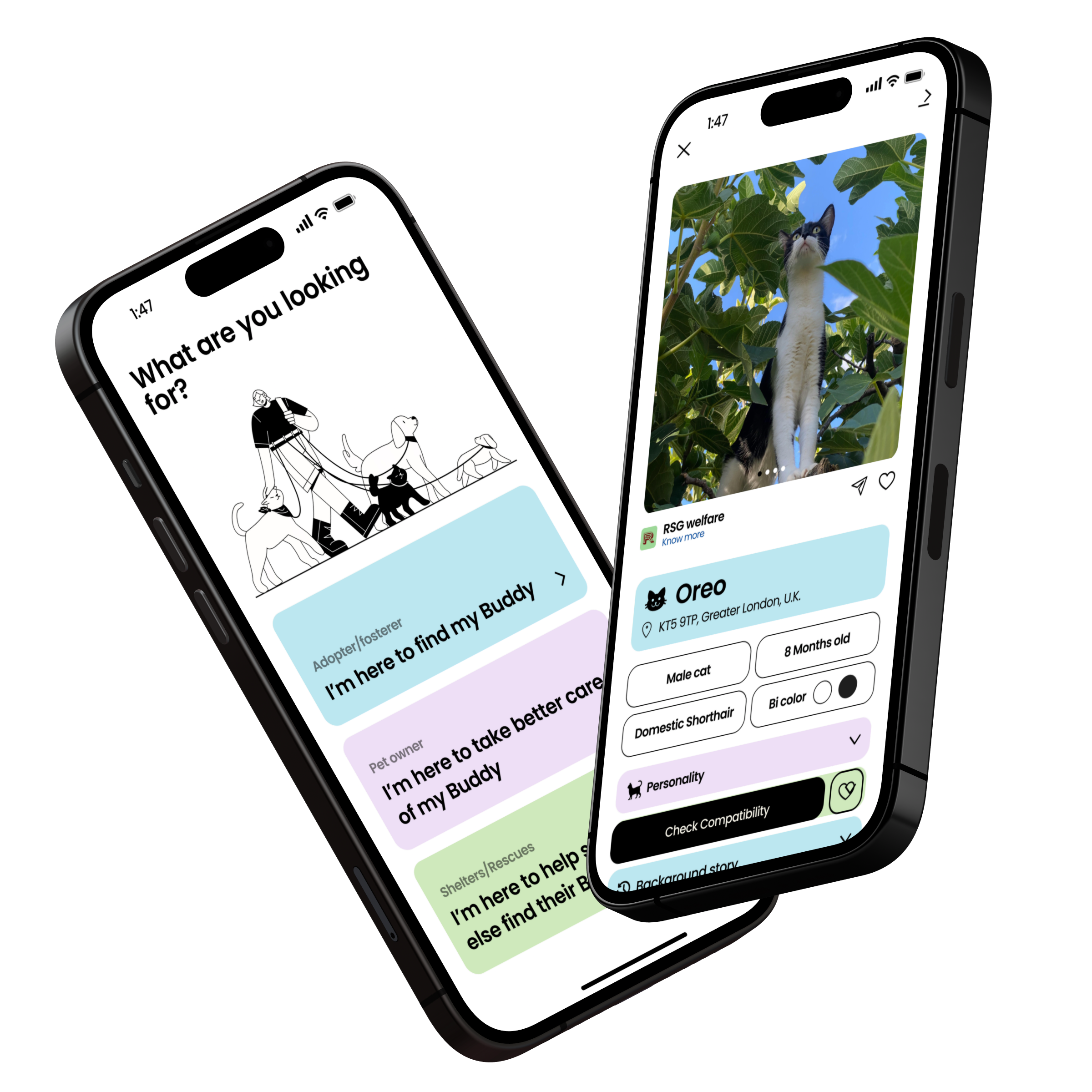
Imagine walking into a shelter filled with hopeful eyes, each animal yearning for a loving home. Now, envision a busy professional, eager to adopt but overwhelmed by the fragmented and opaque adoption process. These disconnected worlds create barriers, leaving countless animals without homes and potential adopters discouraged. This inspired the creation of Buddy—a hypothetical app designed to simplify and enhance the pet adoption experience.
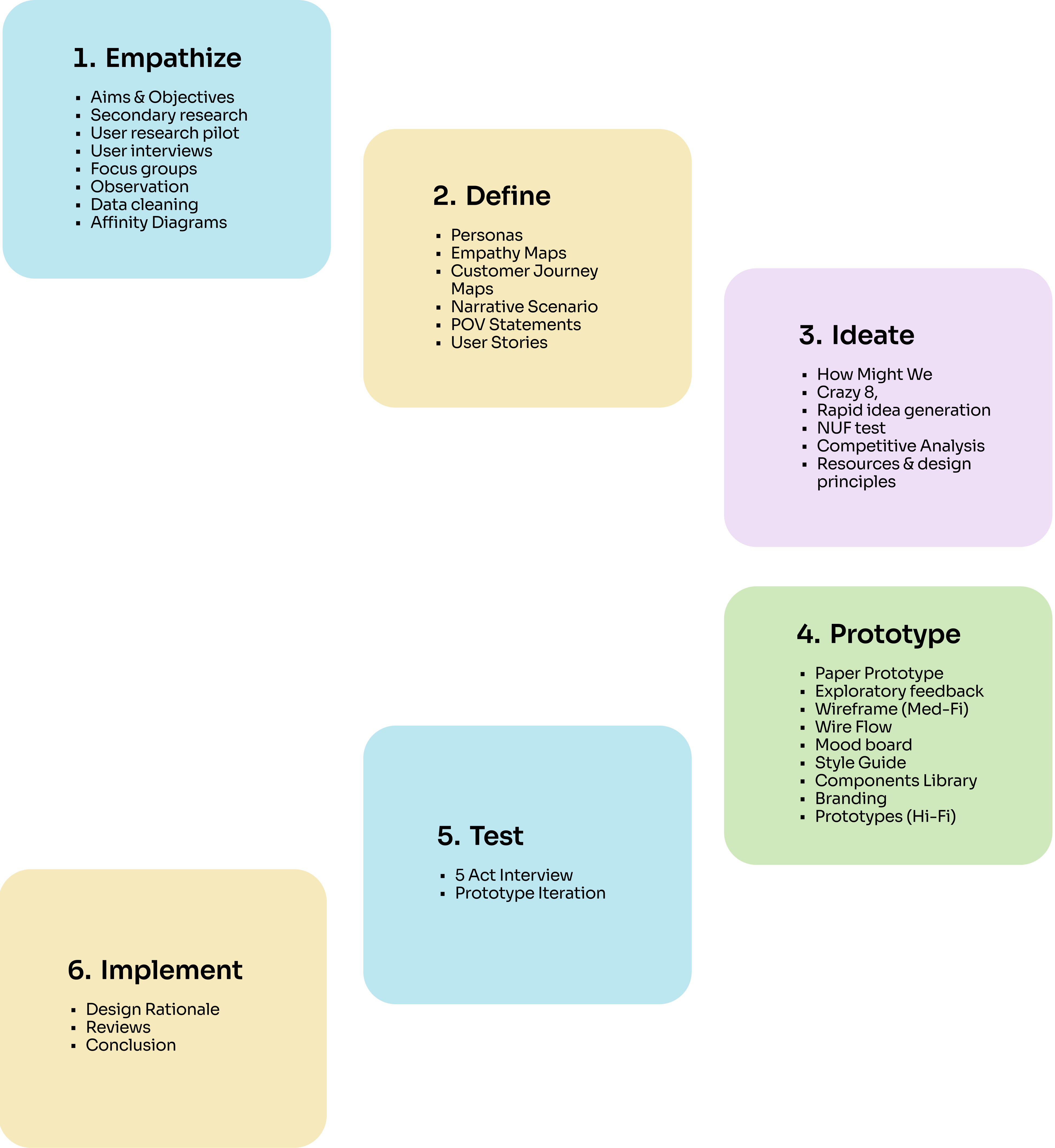
To understand the future users of Buddy, after doing secondary research, we conducted 5 Interviews with potential adopters, current pet owners, and NGO workers. These interviews revealed key pain points and needs:
1. Adopters: They expressed frustration with the lack of up-to-date information on pet availability and the complicated adoption process. They wanted a more transparent and user-friendly platform.
2. Pet Owners: They highlighted the challenge of finding reliable pet care services and felt overwhelmed by the initial responsibilities of pet ownership. They needed resources and support readily accessible in one place.
3. Shelters: The NGO wokers shared insights about the inefficiencies in matching pets with potential adopters and the need for a system that could streamline the process and increase adoption rates.
Empathy maps were created based on the research and interviews.
.jpg)
Persona
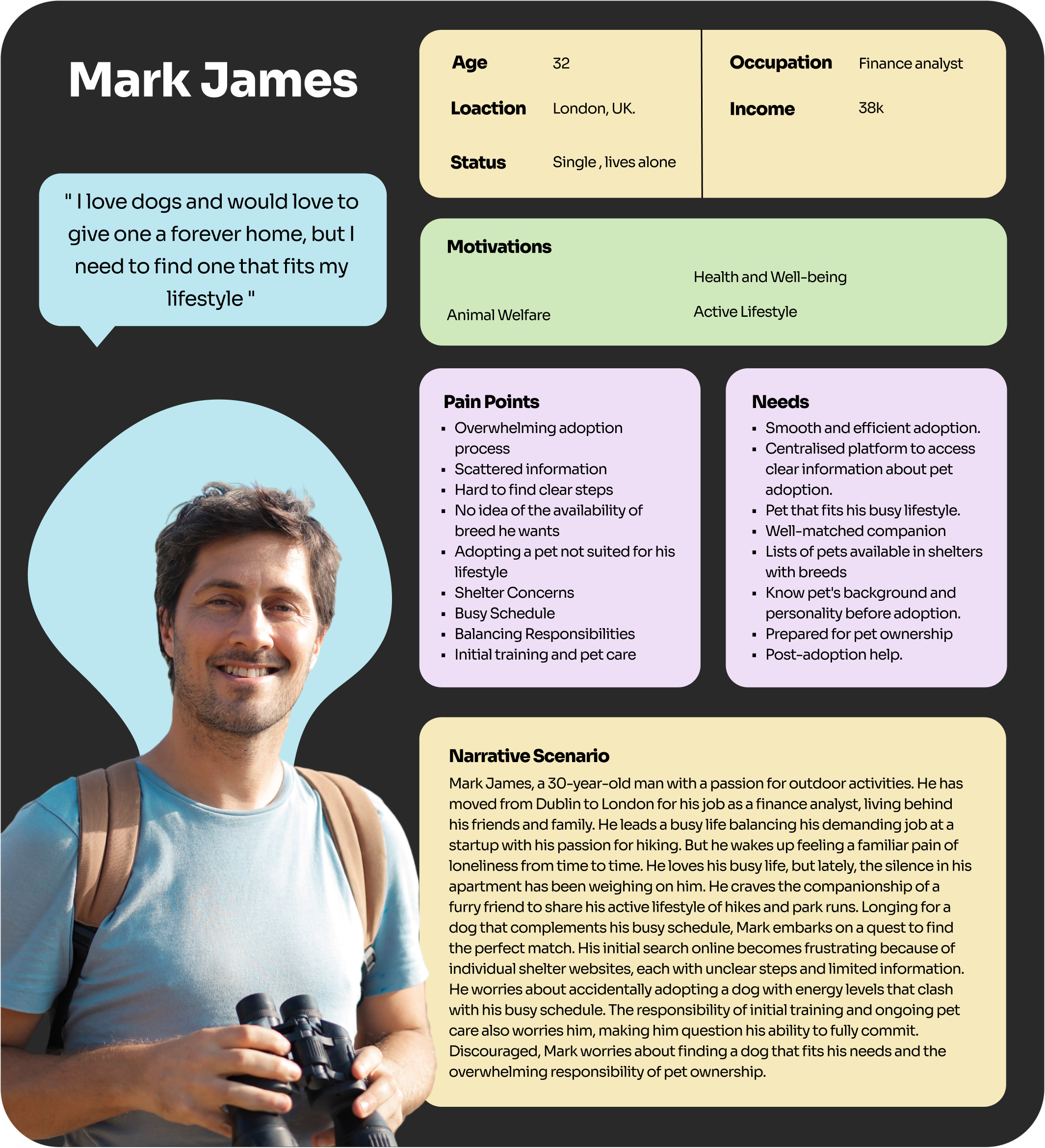
Empathy maps were created based on the research and interviews.
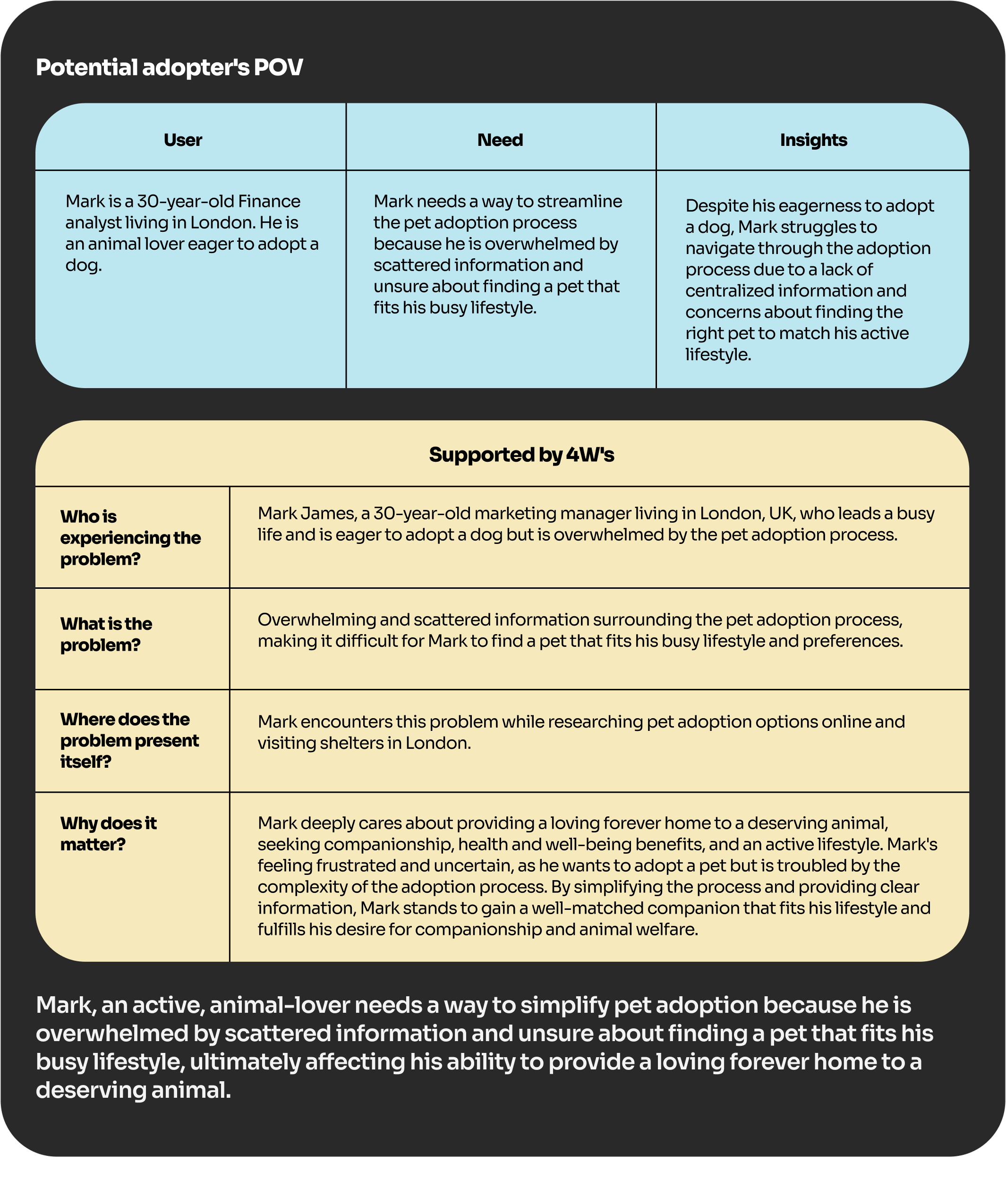
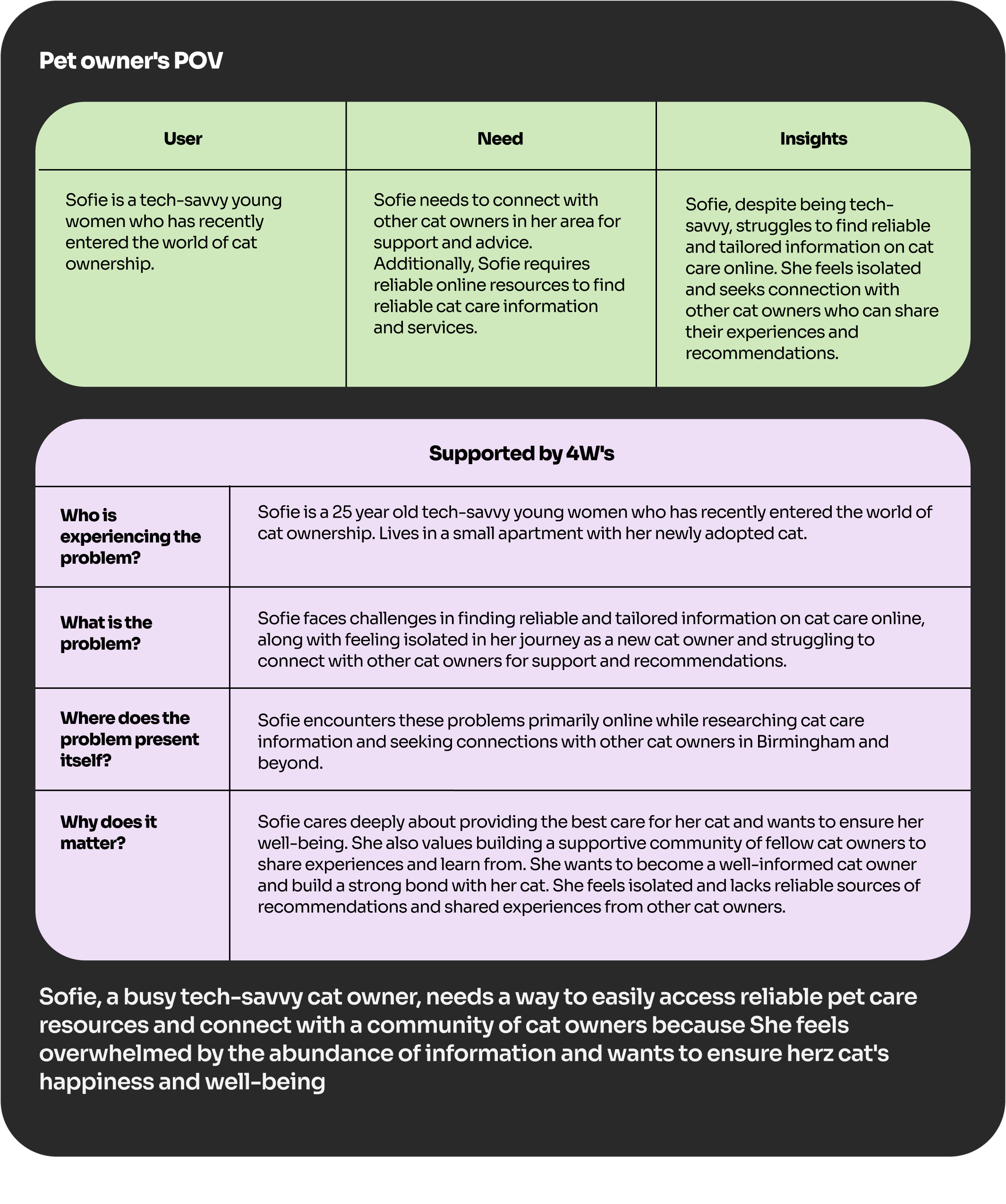
POV Statements
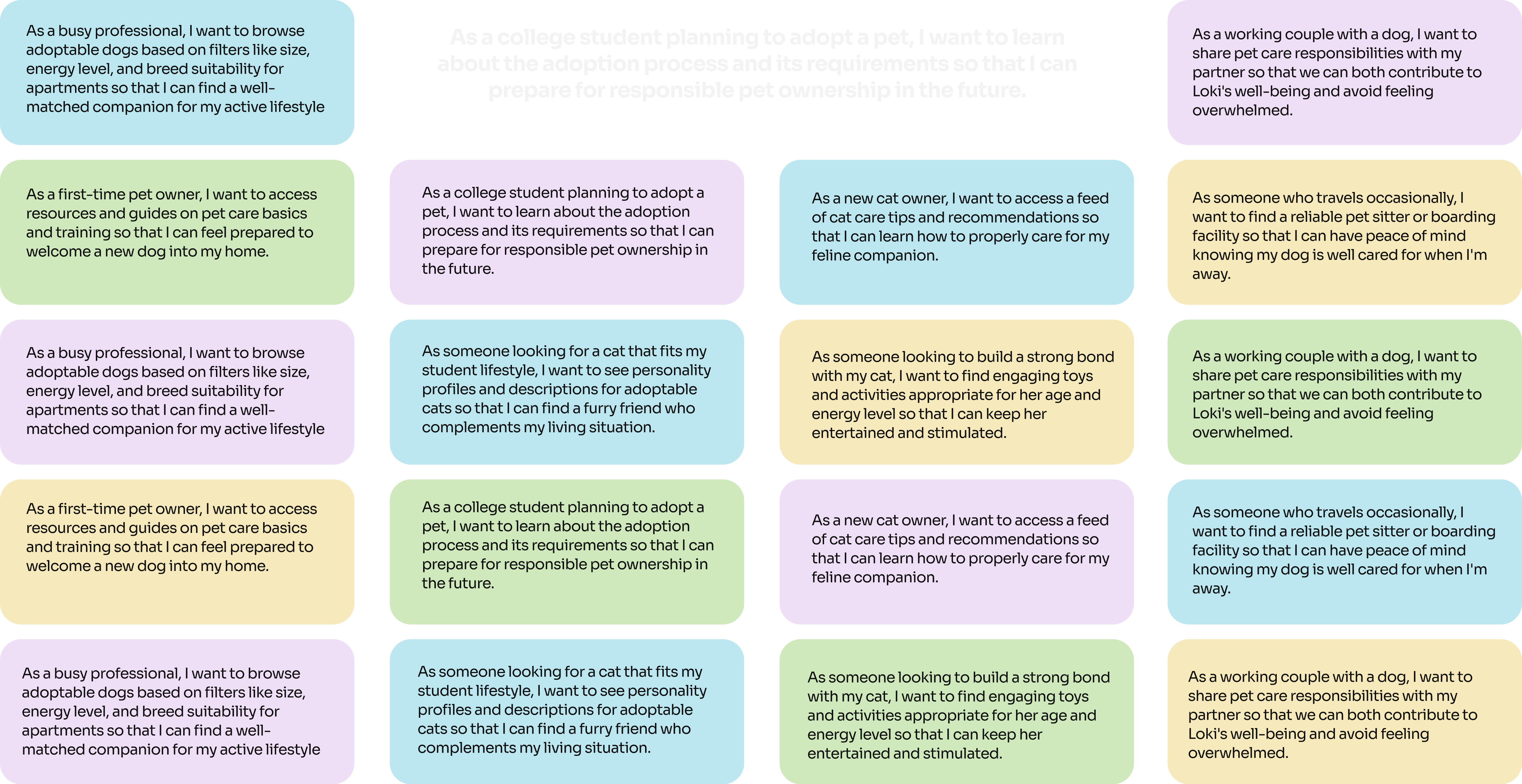
User stories
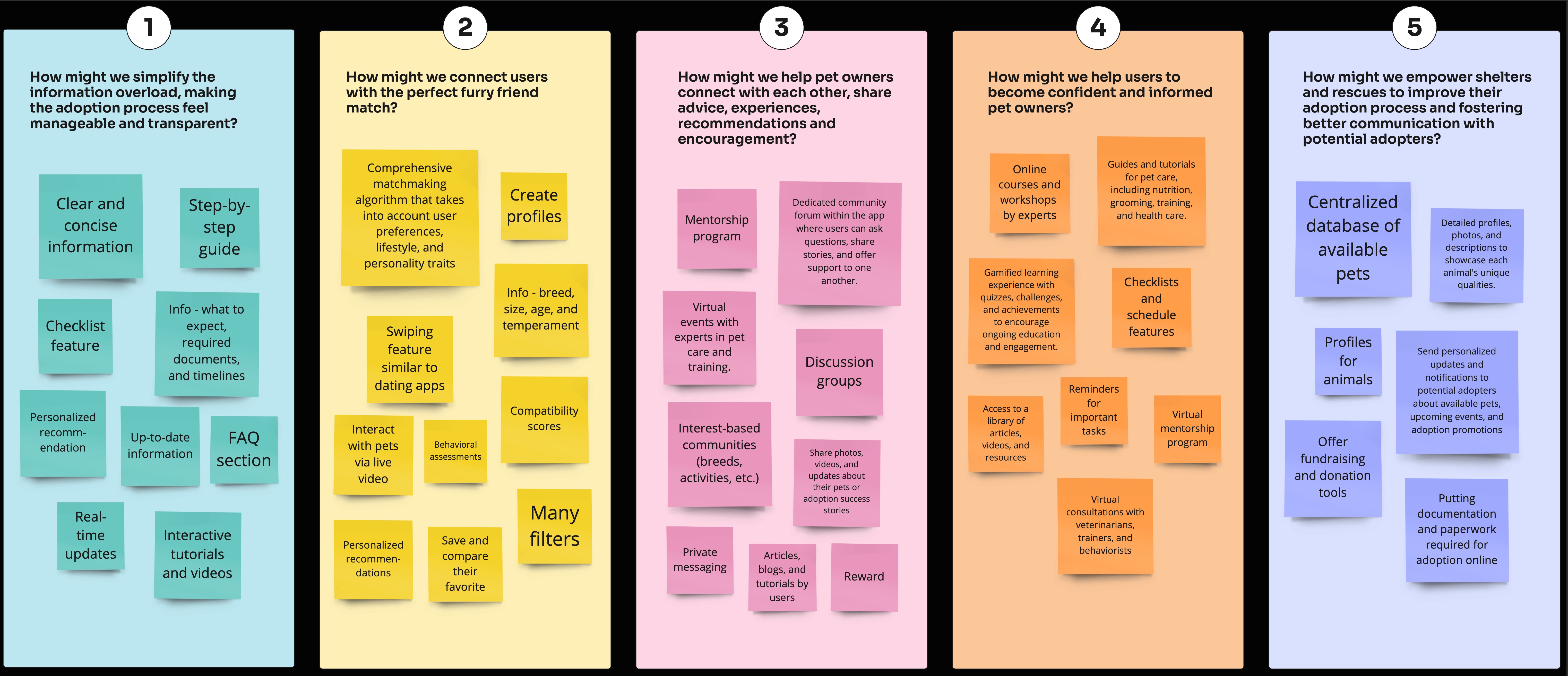
Ideation- How might we?
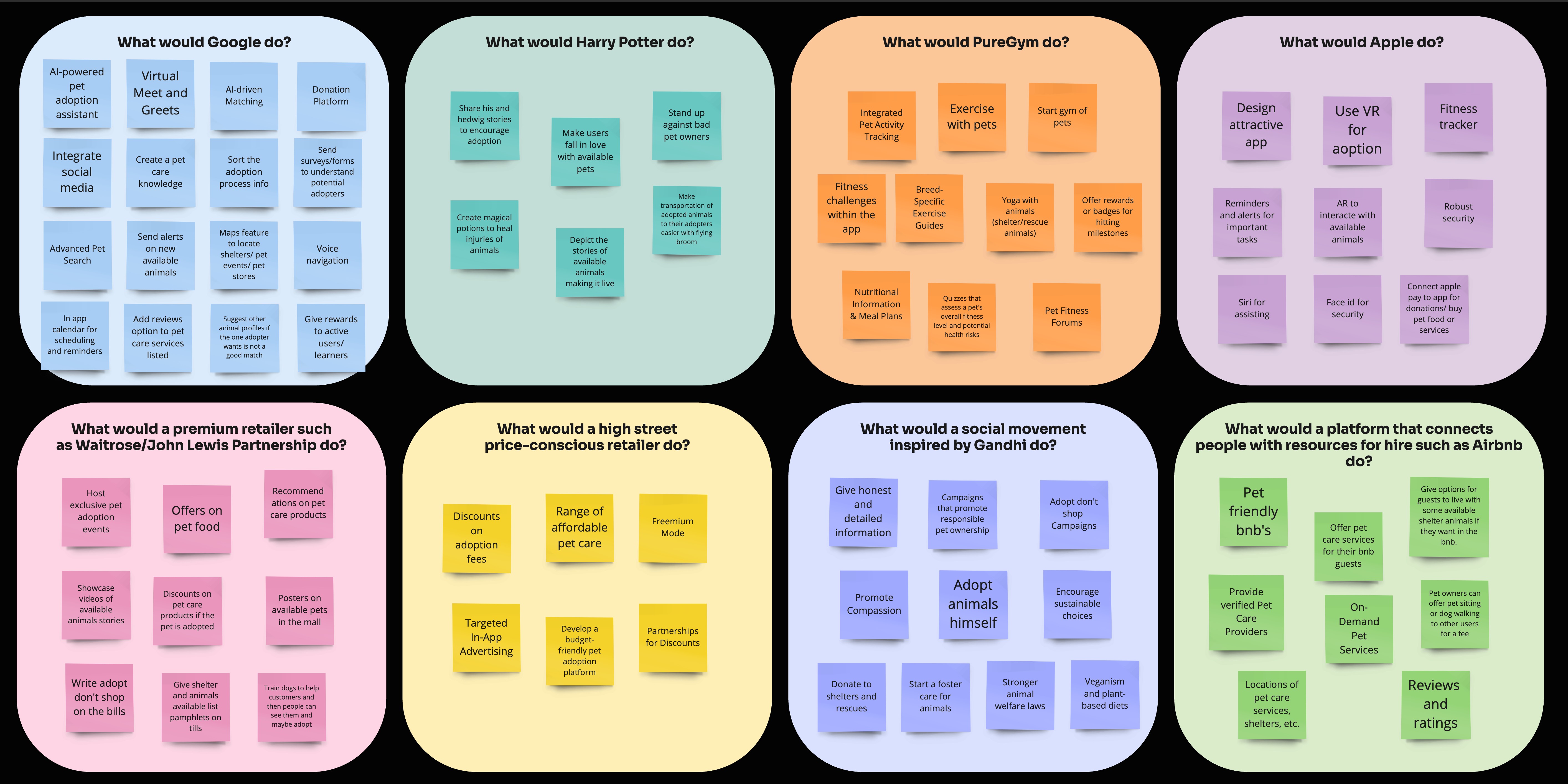
Ideation- Rapid idea generation


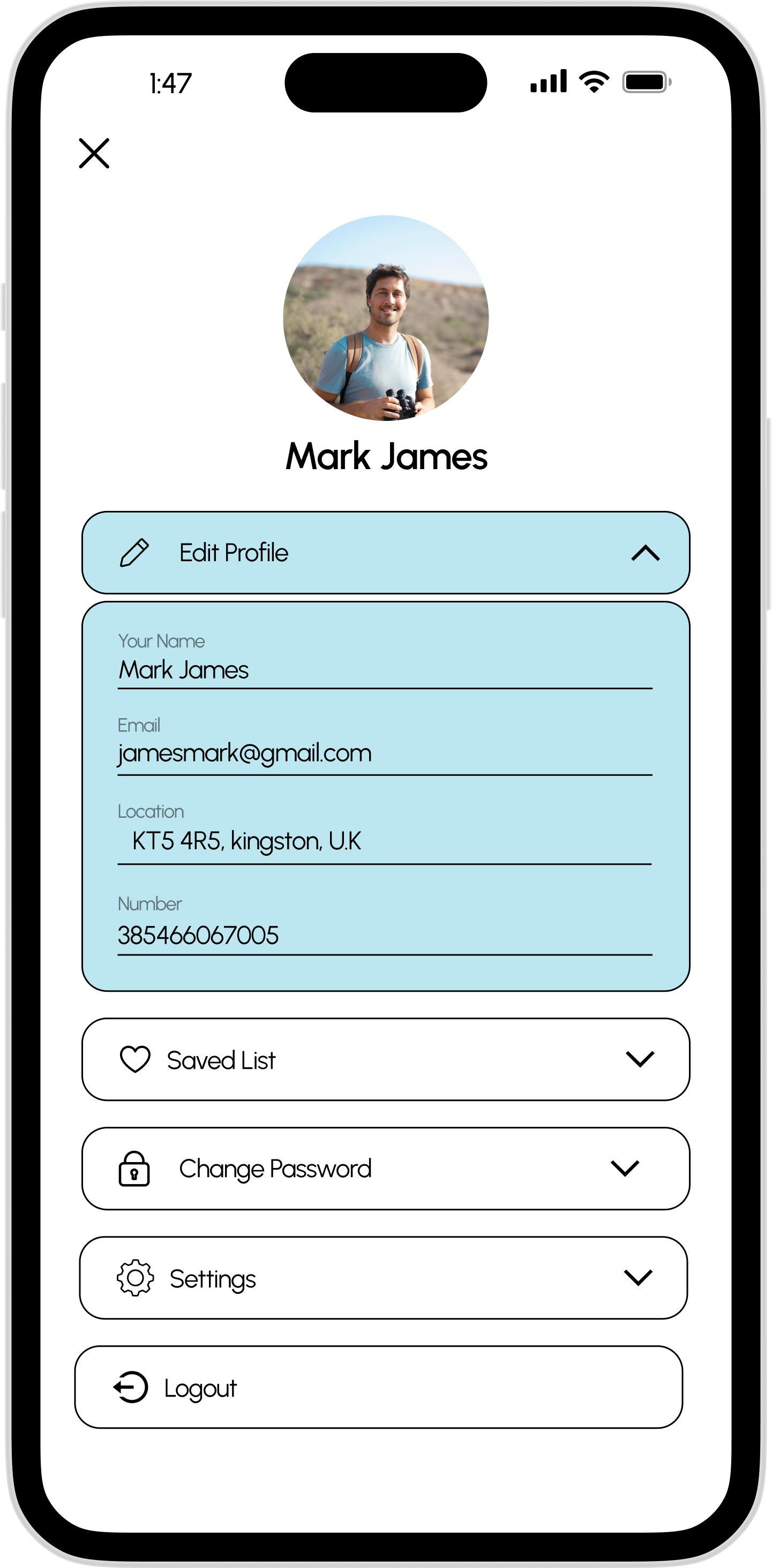
Based on these insights, the final prototype of the Buddy app includes the following features:
User-Friendly Interface: A clean, intuitive design that makes it easy for users to navigate. The home screen offers a simple search function with customizable filters.
Adoption Matching Algorithm: A robust system that matches potential adopters with pets based on lifestyle and preferences, ensuring a higher likelihood of successful adoptions.
Resource Hub: A section dedicated to new pet owners, offering articles, guides, and tips on pet care. The app also includes a directory of vetted pet care services with ratings and reviews.
Shelter/Rescue Management Tools: Tools for shelters to manage pet profiles, update availability, and track adoption inquiries, streamlining the administrative process.
Interactive Support Features: In-app chat and a Q&A section for users to seek advice from experts and experienced pet owners.
Even though Buddy is a conceptual project, we can anticipate its potential impact by projecting hypothetical metrics:
Increased Adoption Rates: If fully developed, Buddy could potentially increase successful adoptions by 20-30% due to its streamlined process and effective matching system. For instance, in a pilot phase with just 10 shelters, the app could facilitate 150-200 additional adoptions annually.
User Engagement: The app’s interactive features and resource hub could see a 50-60% user engagement rate, with users spending an average of 10 minutes per session. This engagement could lead to higher satisfaction rates among new pet owners.
Shelter Efficiency: By implementing Buddy, shelters could experience a 25% reduction in administrative time spent on managing pet profiles and inquiries, allowing staff to focus more on animal care.
Pet Care Service Utilization: The app could connect 70-80% of pet owners with local pet care providers, leading to a 15% increase in revenue for those businesses due to increased visibility and accessibility.
The Buddy app is more than just a mobile platform; it’s a catalyst for change in the pet adoption ecosystem. By addressing the gaps identified in the current system, Buddy offers a streamlined, transparent, and supportive approach to pet adoption and care.